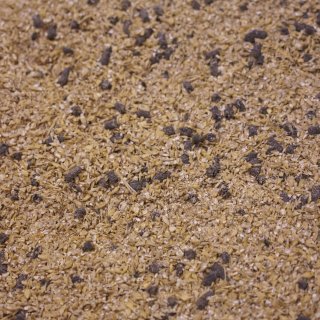

Resilience is a word that appears regularly in farming, but when it comes to livestock feed it does not have to mean preparing for a crisis.
Kathryn Thompson :: Friday 11th September 2026 :: Latest Blog Posts
Building Feed Resilience: Understanding the Options for Your Livestock Business
Resilience is a word that appears regularly in farming, but when it comes to livestock feed it does not have to mean preparing for a crisis.
For most farms, feed resilience is much more practical.
It means understanding where feed comes from, which parts of the ration are already being produced on the farm, what still needs to be bought in and which alternative routes could realistically be used if circumstances change.
That does not mean every farm should become self-sufficient in feed. Bought-in compound feed remains a sensible and efficient option for many livestock businesses.
The aim is simply to understand the choices available.
A farm that knows what crops it has, what its livestock require, how much feed it uses and which processing or purchasing options are practical is in a stronger position to make deliberate decisions about its feeding system.
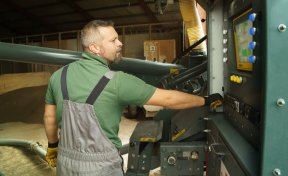
Start With What Is Already Available on the Farm
Before looking at alternative feed systems, start with the resources already available.
For mixed arable and livestock farms, that may include home-grown cereals or pulses. For ruminant businesses, forage quality and quantity will also form an important part of the picture.
Useful questions include:
- What cereals or pulses are currently in store?
- What quantities are available after other commitments?
- What forage is available and what does the analysis tell us?
- Which livestock groups need feeding?
- What production stages are those animals at?
- How much feed is required over the year?
- How seasonal is that demand?
- What storage, handling and access facilities are already available?
Looking at these factors together is important.
A tonne of barley in store does not automatically mean it should be included in a ration. Equally, the fact that a farm currently buys a complete feed does not necessarily mean that is the only practical option.
The value of farm-grown crops depends on how they fit into the wider ration and the economics of the individual business.
Bought-In Compound Feed Still Has an Important Role
Feed resilience should not be interpreted as a campaign against compound feed.
For many farms, a bought-in compound provides a convenient, consistent and practical way to feed livestock without needing to store, process and manage a wider range of individual ingredients.
It may be particularly appropriate where:
- suitable home-grown cereals are not available;
- feed volumes do not justify on-farm processing;
- storage or handling facilities are limited;
- labour is already stretched;
- a specialist formulation is required;
- or simplicity and consistency are priorities.
For some businesses, compound feed will remain the best option.
For others, it may form one part of a wider system alongside home-grown ingredients, straights, blends or on-farm processing.
The important point is to understand why a particular approach suits the farm rather than assuming there is only one way to source feed.
Mobile Mill-and-Mix
For farms with suitable cereals or pulses, mobile mill-and-mix provides another option.
A specialist vehicle visits the farm and processes agreed home-grown ingredients on site. Complementary ingredients can then be incorporated according to the planned ration.
This can help suitable businesses make purposeful use of crops they already grow while retaining greater visibility over the ingredients going into the finished feed.
It does not mean the farm has to supply every component of the ration itself.
Depending on the livestock, forage and production stage, additional protein sources, minerals, oils, fibre sources or other supplements may still be required.
Mobile milling also needs to make practical sense.
Factors include:
- the quantity of suitable crops available;
- overall feed volume;
- farm location and current route availability;
- vehicle access;
- grain storage;
- finished-feed storage and discharge;
- livestock requirements;
- and how regularly batches are likely to be required.
B&W Feeds currently provides mobile mill-and-mix services to approximately 300 farms, processing around 40,000 tonnes annually.
For farms considering the service, Dorset, Wiltshire and Hampshire are currently priority areas for additional enquiries, although route availability still needs to be assessed by postcode and the practical requirements of the individual farm.
Blends and Straights
A farm does not need to produce its entire feed ration on site to make more use of its own resources.
Straights and blends can provide another route.
Individual feed materials or bespoke blends may be used alongside home-grown cereals and forage to supply the additional ingredients required within the wider feeding plan.
B&W Feeds currently works with approximately 60 blend and straights customers.
As with any feed option, suitability depends on the individual ration.
A straight feed should not be viewed in isolation simply because it appears to be a convenient ingredient. The livestock species, production stage, forage, home-grown crops and overall nutrient requirements still need to be considered together.
For some farms, using home-grown cereals alongside bought-in complementary ingredients can offer a useful middle ground between buying all feed as a complete compound and producing everything on farm.
Permanent On-Farm Milling
At a larger scale, some livestock businesses may consider investing in their own permanent milling and mixing system.
This is a very different decision from booking a mobile mill.
A static system is a capital investment and needs to be justified by the farm's long-term feed requirements, available crops, infrastructure and expected throughput.
Factors to consider include:
- grain intake;
- raw-material storage;
- dosing accuracy;
- milling;
- mixing;
- automation;
- labour requirements;
- finished-feed discharge;
- available space;
- maintenance;
- and how the system may need to develop in future.
B&W Feeds supplies Buschhoff static milling and mixing systems in the UK and can discuss how a permanent system might be configured around the requirements of an individual business.
However, a static mill is not simply the "next step" from mobile milling.
For some farms, the investment will make sense. For others, a mobile service or bought-in feed may remain considerably more practical.
The Most Resilient Answer May Be a Combination
Feed decisions are often presented as an either/or choice.
Do we buy compound feed, or do we make our own?
In practice, the most appropriate answer may sit somewhere between the two.
Different livestock groups can have different requirements.
A farm might use home-grown cereals within one ration, a bespoke blend for another group and bought-in compound feed where that remains the most convenient option.
Seasonal changes can affect the answer too.
The crops available after harvest, forage quality, livestock numbers and housing periods can all influence the most practical approach at different points in the year.
A combination of:
- bought-in compound feed;
- blends and straights;
- mobile mill-and-mix;
- and, where justified, permanent on-farm milling
may provide more flexibility than trying to force every livestock group into one system.
The objective should not be to choose the option that sounds most independent.
It should be to choose the combination that works nutritionally, practically and commercially for the individual farm.
Questions to Ask When Reviewing Feed Resilience
A useful feed review does not need to begin with machinery or product prices.
Start with the farm.
Ask:
- What suitable crops are we already growing?
- How much feed do we use over a year?
- How seasonal is that requirement?
- What forage and other feed resources do we already have?
- What storage and handling infrastructure is available?
- Which ingredients still need to be bought in?
- How dependent are we on one feed supplier or one method of sourcing feed?
- If that arrangement changed, what alternatives could realistically work?
- Do our feed volumes make mobile milling practical?
- Are we within a current mobile milling route?
- Could our own crops form part of the ration?
- Would permanent milling be justified by the scale and long-term requirements of the business?
- What additional labour or infrastructure would different options require?
- Which approach makes sense nutritionally as well as commercially?
These questions do not necessarily lead to a major change.
A review may confirm that the existing feeding system remains the best option.
That is still a useful outcome.
Feed Resilience Is About Understanding Your Options
The aim of feed resilience is not maximum self-sufficiency at any cost.
It is about understanding the resources already available on the farm, knowing the practical alternatives and being able to make informed decisions when circumstances change.
For one farm, that may mean continuing with bought-in compound feed.
For another, it could involve incorporating more home-grown cereals through mobile mill-and-mix.
Elsewhere, blends and straights may complement existing crops and forage, while a larger livestock business may have the scale to justify a permanent milling system.
There is no single answer.
The right approach depends on the livestock, ration, crops, forage, feed volumes, storage, handling, labour, infrastructure and economics of the individual business.
B&W Feeds works with farmers to explore those options and understand how different feed systems could fit the farm.
To discuss your livestock, crops, feed volumes and current feeding system, contact B&W Feeds and talk to the team about which options may be relevant to your business.