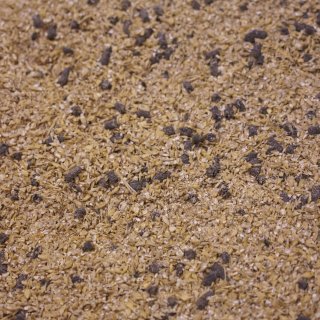

Before winter feeding settles in, review these seven areas of your livestock ration, from forage and home-grown crops to feed use, storage and livestock changes.
Kathryn Thompson :: Wednesday 14th October 2026 :: Latest Blog Posts
Before the Next Batch: 7 Things to Review in Your Livestock Ration This Autumn
Once harvest is in and winter feeding routines begin to settle, it can be tempting to keep ordering or producing the same ration simply because it worked last time.
Sometimes that is exactly the right decision.
But autumn is also a useful point to check whether the farm you are feeding today is still the same farm the previous ration was planned around.
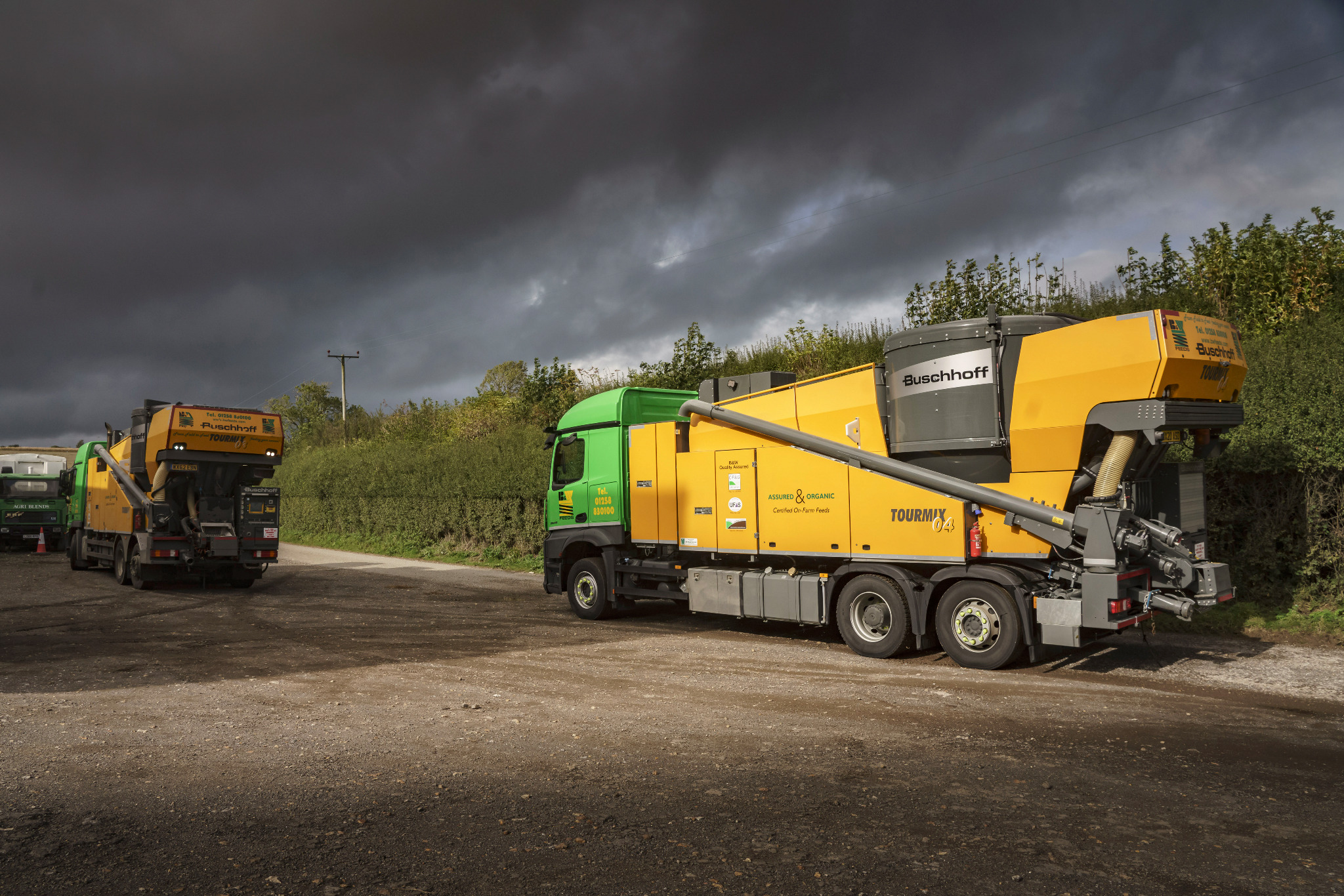
Forage information may now be available. Harvested cereals and pulses are in store. Livestock numbers may have changed. Animals may be moving into different production stages. Housing arrangements, storage or the rate at which feed is being used may look different from a few months ago.
A ration review does not have to mean a ration change.
It simply means checking the assumptions behind the current feeding plan before they become the default for the winter.
Here are seven useful areas to review.
1. Has your forage picture changed?
For cattle and sheep businesses, forage is an obvious place to begin.
By autumn, there is usually a much clearer picture of what is actually in store for the winter. Quantity matters, but so does quality.
Where forage analysis is available, it gives useful information for the wider ration discussion. Rather than treating concentrate feed separately from silage, hay or other forage, the two need to be considered together.
Useful questions include:
- What forage is actually available?
- Are there different clamps, cuts or batches that need to be considered separately?
- Do you have recent analysis?
- How quickly is forage likely to be used?
- Has quality differed from what was expected when the previous ration was planned?
The point is not to alter a ration every time a number changes. It is to make sure the purchased or home-produced feed is still being considered alongside the forage animals are actually eating.
2. What did harvest leave you with?
For mixed arable and livestock farms, autumn is when the theoretical home-grown feed supply becomes much more concrete.
You now know more about the cereals and pulses actually in store rather than what you hoped might be available before harvest.
Take stock of:
- crop type;
- approximate quantity;
- quality and condition;
- what is already committed elsewhere;
- what needs to be retained for seed or sale;
- storage arrangements; and
- how much could realistically be available for livestock feed.
Having grain in store does not automatically mean it should be fed.
Its place in the ration depends on the livestock, forage, other ingredients required and the wider economics of using it rather than selling it.
But if home-grown cereals or pulses are going to form part of the ration, the feeding plan should be based on what is genuinely available now.
3. Have livestock numbers or production stages changed?
A ration suitable for one group at one point in the production cycle will not necessarily remain appropriate indefinitely.
Autumn may coincide with changes such as:
- cattle moving into housing;
- finishing groups changing;
- dairy cows moving through different stages of lactation;
- youngstock numbers increasing or decreasing;
- lambing or calving groups being planned;
- pig or poultry batches moving to another stage; or
- livestock being sold, bought or regrouped.
Even where the ingredients remain broadly similar, the quantity required can change substantially if numbers or feeding periods have altered.
Before repeating a previous order or mill-and-mix batch, check that the livestock assumptions behind it are still current.
4. Is feed being used at the rate you expected?
One of the simplest checks is also one of the most useful: compare planned feed use with what is actually happening.
If a batch that normally lasts a certain period is disappearing noticeably faster or slower, it is worth understanding why.
The reason may be straightforward. Livestock numbers may have changed, feeding rates may have been adjusted or a group may have moved.
But unexplained differences are worth investigating rather than simply increasing or decreasing the next batch.
For mobile mill-and-mix customers in particular, an approximate idea of feed requirement helps with both ration planning and the practical scheduling of future visits.
5. Have any bought-in ingredients changed?
Home-grown cereals are only one part of many feeding systems.
Depending on the ration, farms may also be using protein sources, minerals, oils, fibre sources, supplements, straights or pre-mixed feeds.
Before assuming the next batch will be identical to the last, check whether:
- the formulation has changed;
- a particular ingredient is no longer required;
- a new ingredient has been introduced;
- availability has changed;
- a different product or specification is being considered; or
- quantities need adjusting.
An apparently small ingredient change can affect the wider ration, so substitutions should not be made simply because two products look similar on paper.
If an ingredient or product needs to change, discuss it as part of the complete feeding plan.
6. Do the practical arrangements still work?
A good feed plan also has to work in the yard.
Autumn and winter can expose practical issues that are much less significant during drier months.
Review:
- raw-material storage;
- finished-feed storage;
- access for feed deliveries or mobile milling vehicles;
- discharge arrangements;
- gateways and turning areas;
- the effect of wetter ground;
- staffing or labour changes; and
- how feed will move from store to livestock.
For a mobile mill-and-mix visit, access and storage are not minor details. The vehicle needs to be able to reach the raw materials safely and the finished feed needs a suitable place to go.
If something has changed since the previous visit, tell B&W Feeds before the mill is on its way.
7. What are you actually trying to achieve?
This final question helps prevent a ration review becoming an exercise in changing ingredients for the sake of it.
What is the reason for reviewing the feeding plan?
It might be:
- a change in livestock requirements;
- different forage;
- making practical use of cereals now in store;
- reducing reliance on a particular bought-in ingredient;
- simplifying feed handling;
- preparing for a longer housing period;
- addressing a storage constraint; or
- simply checking that the existing approach still makes sense.
Sometimes the conclusion will be to keep the current ration unchanged.
That is a perfectly useful outcome.
The value of the review is knowing that the decision has been made against current information rather than repeating last winter's approach automatically.
What should you have ready for a useful feed conversation?
Whether you are an existing B&W Feeds customer or considering a different feeding option, you do not need a fully worked-out ration before getting in touch.
A useful starting point is:
- livestock species and approximate numbers;
- production stage or main livestock group;
- forage information or analysis, where relevant;
- cereals or pulses available on farm;
- approximate feed requirement;
- current feed or ration;
- organic or conventional status;
- any important storage or access constraints; and
- what has changed or what you want to review.
From there, the team can discuss the relevant options.
For some farms that may mean continuing with the existing feed. For others it could involve a bespoke pre-mixed feed, different straights or complementary ingredients, or using suitable home-grown cereals and pulses through mobile mill-and-mix.
Larger businesses considering permanent on-farm feed production may have a separate discussion around static milling and mixing systems.
The useful starting point is the same: understand the farm as it is now.
Before the next batch
Autumn does not automatically require a new ration.
But it is a sensible time to check whether the ration, quantities and practical arrangements still reflect the livestock, forage, crops and feeding system currently on the farm.
Before the next order or mobile mill-and-mix visit, ask one simple question:
What has changed since this feed was last planned?
If the answer is 'nothing', the existing approach may still be appropriate.
If something has changed, it is better to identify it before the next batch is produced rather than afterwards.
To review your feed requirements with B&W Feeds, call 01258 830100 or email enquiries@bwfeeds.com.
If you are enquiring about mobile mill-and-mix for the first time, include your postcode, livestock type, organic or conventional status, home-grown cereals or pulses available, approximate feed requirement and any important access or storage information so the team can review current route availability and practical suitability.