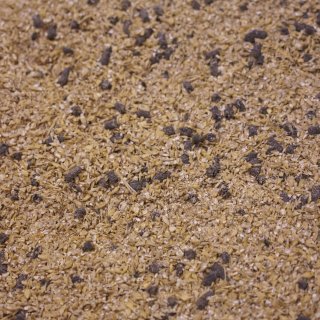

Once cereals and pulses are safely in store, farmers need to decide whether crops should be sold, retained or used within the livestock enterprise.
Kathryn Thompson :: Monday 3rd August 2026 :: Latest Blog Posts
Sell It or Feed It? Assessing the Value of Home-Grown Cereals After Harvest
Harvest brings a series of important commercial decisions. Once cereals and pulses are safely in store, farmers need to decide whether crops should be sold, retained or used within the livestock enterprise.
For mixed arable and livestock farms, the question is rarely as straightforward as comparing the current grain price with the cost of bought-in feed. Home-grown cereals can have a different value when considered as part of a complete livestock ration.
That does not mean every tonne should automatically be fed rather than sold. It means the decision should account for the whole farming system: livestock requirements, forage quality, storage, processing, complementary ingredients and the farm's wider commercial objectives.
START WITH THE CROPS AVAILABLE
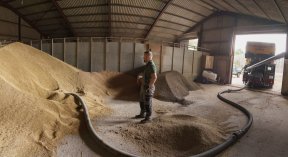
The first step is to understand what has actually been harvested and placed in store.
Consider:
- The type of cereals or pulses available.
- The quantity likely to remain after existing commitments.
- Crop quality and storage condition.
- How long the grain can be stored safely.
- Whether the crop is suitable for the livestock on the farm.
- Whether processing will be required before it can be included effectively.
A crop may have a clear market value, but it may also provide a useful source of energy, starch or protein within the farm's own ration. The relative value of those two options will vary with commodity markets, purchased-feed prices and the livestock enterprise's requirements.
REVIEW THE LIVESTOCK FEED REQUIREMENT
Before allocating grain, estimate what the livestock will need during the coming months.
This should take account of:
- Livestock species.
- Numbers in each group.
- Age or production stage.
- Expected housing periods.
- Growth, finishing or production objectives.
- Current body condition and performance.
- Existing feed stocks.
- Anticipated changes in livestock numbers.
The same cereal may play a different role in a ration for finishing cattle, dairy cows, growing pigs or commercial poultry. A broad calculation based only on total livestock numbers is therefore unlikely to provide enough information. The ration needs to reflect the animals that will actually receive it.
CONSIDER THE WIDER FORAGE PICTURE
Cereals should not be assessed in isolation from forage. The quantity and quality of silage, hay, grazing or other forage available will affect the role that grain needs to play within the ration.
Forage analysis can provide useful information about factors such as energy, protein, dry matter and fibre. This helps identify where the wider ration may need to be supported. A farm with strong forage may require a different cereal inclusion from one facing limited supplies or variable quality.
The objective is not simply to use as much home-grown grain as possible. It is to incorporate it at an appropriate level within a properly balanced ration.
IDENTIFY THE INGREDIENTS THAT ARE MISSING
Home-grown cereals can provide a valuable foundation, but they do not automatically create a complete feed.
Depending on the livestock and available forage, the ration may require additional:
- Protein.
- Minerals and trace elements.
- Oils.
- Digestible fibre.
- Vitamins.
- Supplements or specialist products
These ingredients need to be considered when comparing the value of using home-grown grain with purchasing a complete compound feed. The true cost of the home-grown option includes the complementary ingredients and processing required to turn the crop into a suitable ration. This is one reason why a ration conversation is more useful than a simple comparison between grain price and compound-feed price.
ACCOUNT FOR PROCESSING AND PRACTICALITY
Grain normally needs to be processed and mixed before it can be used effectively within livestock feed.
A farm considering home-grown cereals therefore needs to assess:
- Whether suitable milling equipment is already available.
- The labour required to operate and maintain it.
- Energy and maintenance costs.
- Ingredient storage.
- Weighing and mixing accuracy.
- Finished-feed storage.
- The frequency with which new batches will be required.
- Whether the system can adapt to different recipes.
For some businesses, investing in a permanent static mill may be justified by scale, capacity and long-term requirements. For others, a mobile mill-and-mix service may provide access to on-farm processing without the farm operating its own permanent mill.
Farms without suitable cereals, sufficient volume or appropriate access may find that a pre-mixed feed remains the more practical route.
UNDERSTAND HOW MOBILE MILL-AND-MIX WORKS
A mobile mill visits the farm and processes the customer's cereals and pulses on site. Depending on the agreed ration, complementary ingredients such as proteins, minerals, oils and supplements can also be incorporated. The finished feed can then be discharged into an agreed location, such as a bin, tote bag, trailer or suitable storage area.
This gives suitable farms an opportunity to:
- Use crops already stored on site.
- Maintain greater visibility over the ingredients.
- Produce feed around a specific livestock group.
- Adapt the ration when farm circumstances change.
- Avoid operating and maintaining a permanent mill.
- Reduce unnecessary movements of raw materials.
Mobile milling will not be commercially or practically suitable for every farm. Location, volume, access, crop availability and storage all need to be considered.
COMPARE THE COMPLETE COSTS
The market price of grain and the price per tonne of compound feed are important-but neither tells the whole story.
A more complete comparison may include:
- The opportunity value of the home-grown crop.
- Purchased complementary ingredients.
- Milling and mixing.
- Transport.
- Handling.
- Labour.
- Storage.
- Losses and waste.
- Advice included within the service.
- The ability to alter the ration.
- The value placed on ingredient control and traceability.
The best commercial choice will depend on the individual business. Some farms may decide to sell most of the crop and retain a proportion for livestock feed. Others may place greater value on using home-grown resources within the enterprise. Some may continue purchasing a complete feed because it remains the most practical option.
The purpose of the review is not to reach a predetermined answer. It is to make an informed decision using all the relevant information.
AVOID MAKING THE DECISION ONCE
The value of selling or feeding a crop can change. Commodity prices move. Livestock numbers alter. Forage quality becomes clearer. Purchased ingredients change in price or availability. Winter length and weather conditions affect feed use.
The decision made immediately after harvest may therefore need to be reviewed later in the season. Good feed planning should allow room to respond rather than committing every available tonne before the farm understands its complete winter position.
QUESTIONS TO DISCUSS WITH B&W FEEDS
Before speaking to the B&W Feeds team, it is helpful to gather:
- Farm postcode.
- Livestock species and approximate numbers.
- Organic or conventional status.
- Cereals and pulses available.
- Approximate quantities.
- Current forage information.
- Existing feed approach.
- Storage and discharge arrangements.
- Expected monthly or annual feed requirement.
- The main commercial or nutritional challenge.
This allows the team to assess whether mobile mill-and-mix is likely to be practical and whether the farm falls within a current service route.
MAKE A DECISION AROUND THE WHOLE FARM
The question after harvest is not simply, "What can I sell this grain for?"
For a mixed farm, it is also:
"What value could this crop create within my livestock enterprise?"
Answering that properly requires consideration of livestock needs, forage, complementary ingredients, processing, storage and the wider commercial plan.
B&W Feeds helps livestock farmers explore how home-grown cereals and pulses could form part of a complete, traceable ration produced directly on farm.
To discuss your available crops, feed requirements and current service availability, contact the B&W Feeds team.